
For beginners and the parents who practise with them: learn what every line and space means, remember them with four short phrases, and stop counting up from the bottom every time.
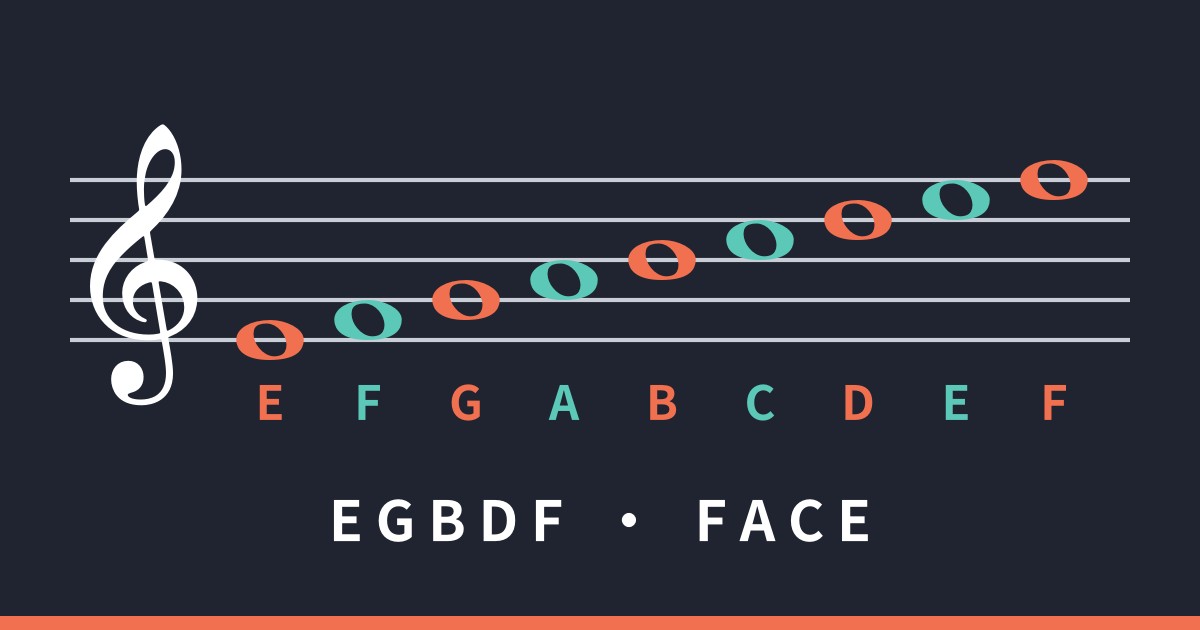
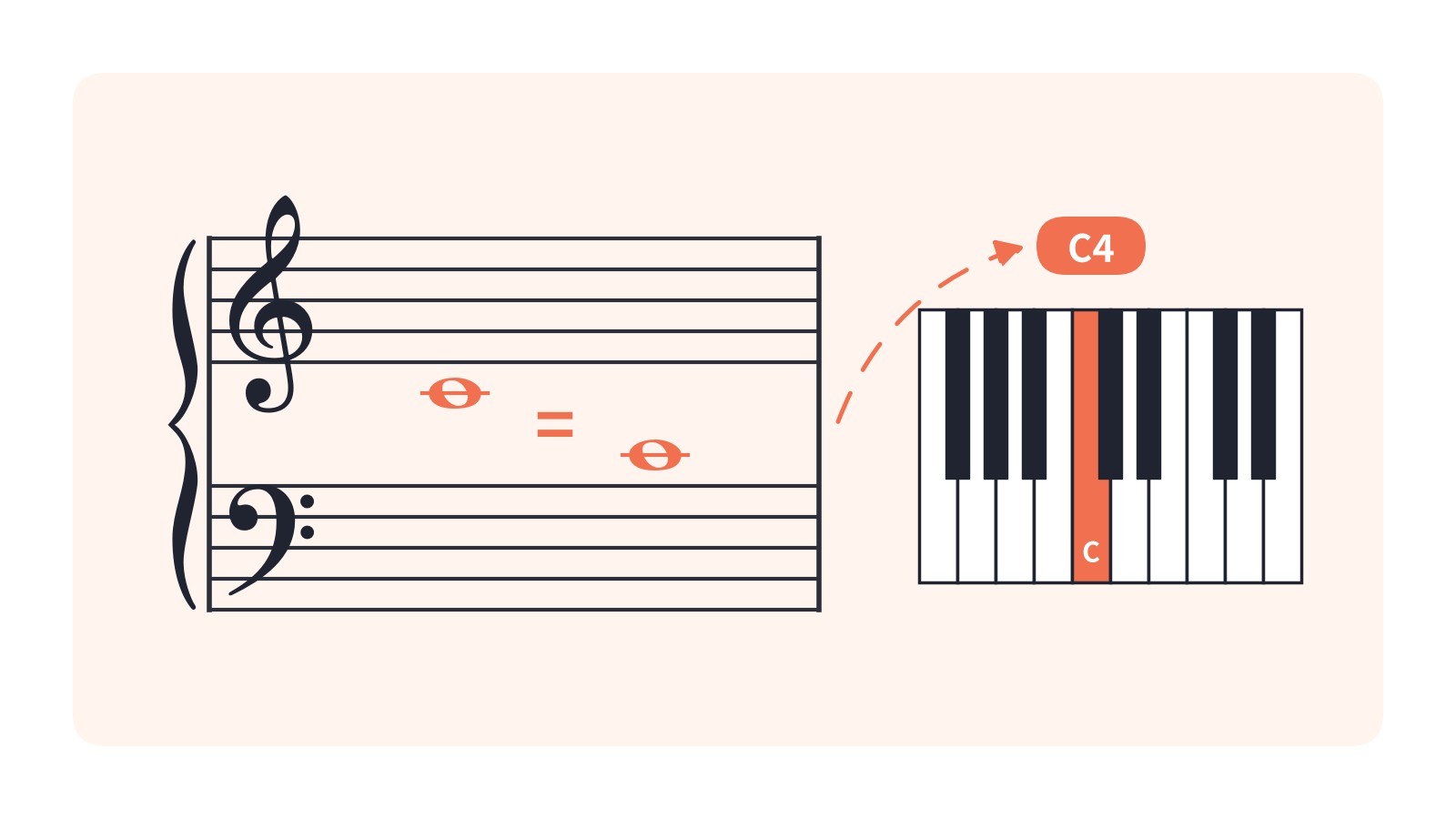
In the treble clef, the 5 lines from bottom to top are E, G, B, D, F and the 4 spaces are F, A, C, E; in the bass clef, the lines are G, B, D, F, A and the spaces are A, C, E, G; middle C sits on the first ledger line between the two clefs.
How do you count lines and spaces on the staff?
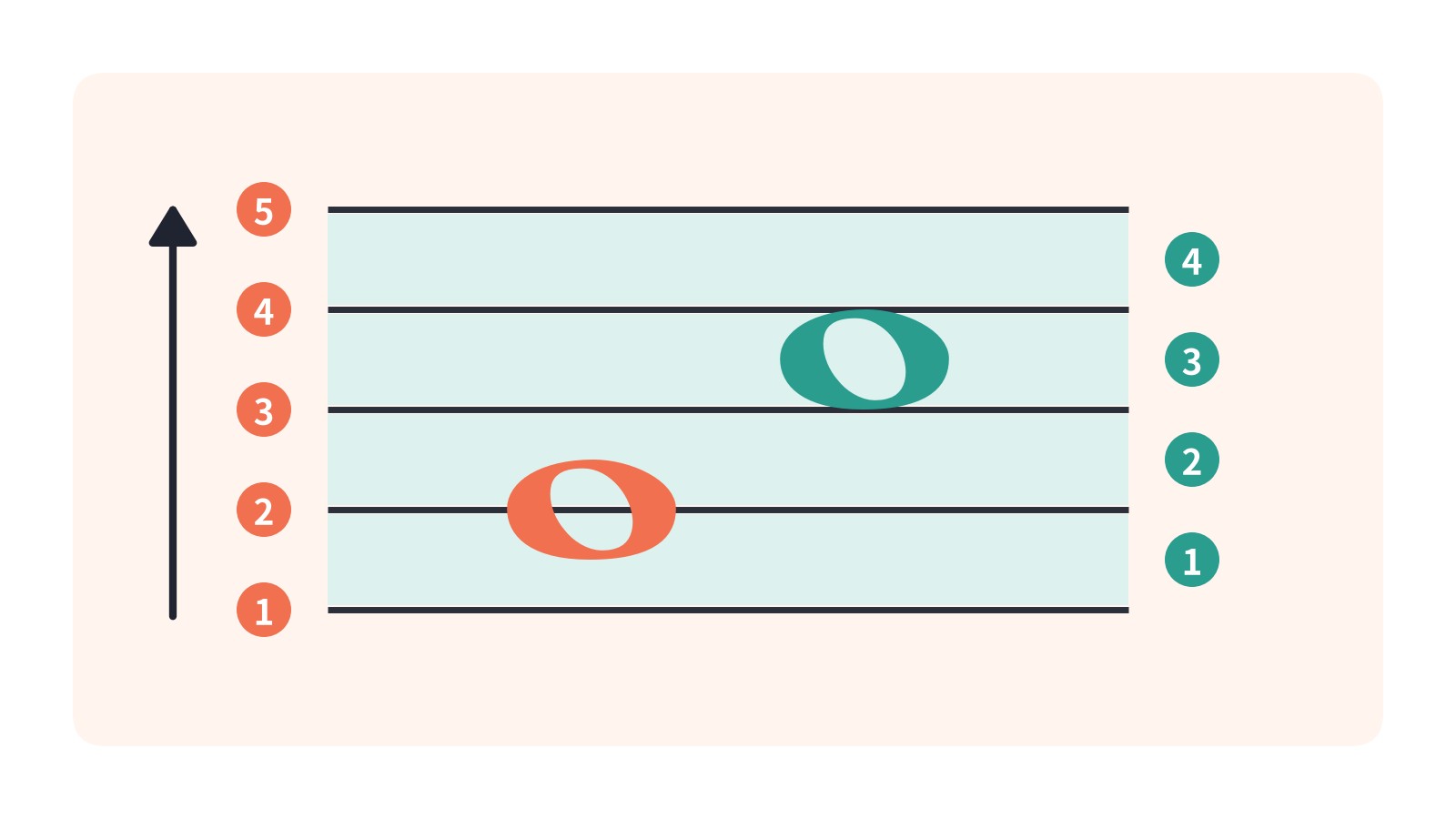
The staff has five lines and four spaces between them. Always count from the bottom up: the bottom line is line 1 and the top line is line 5.
A note can sit on a line (the line runs through its middle) or in a space. Moving up the staff, lines and spaces alternate, and each step is the next letter of the musical alphabet: A B C D E F G, then back to A.
The clef at the start of the staff tells you which line is which note. Piano music usually has a treble clef on top (right hand) and a bass clef below (left hand).
New to the staff altogether? Start with our hub guide, How to Read Sheet Music.
What are the treble clef notes?
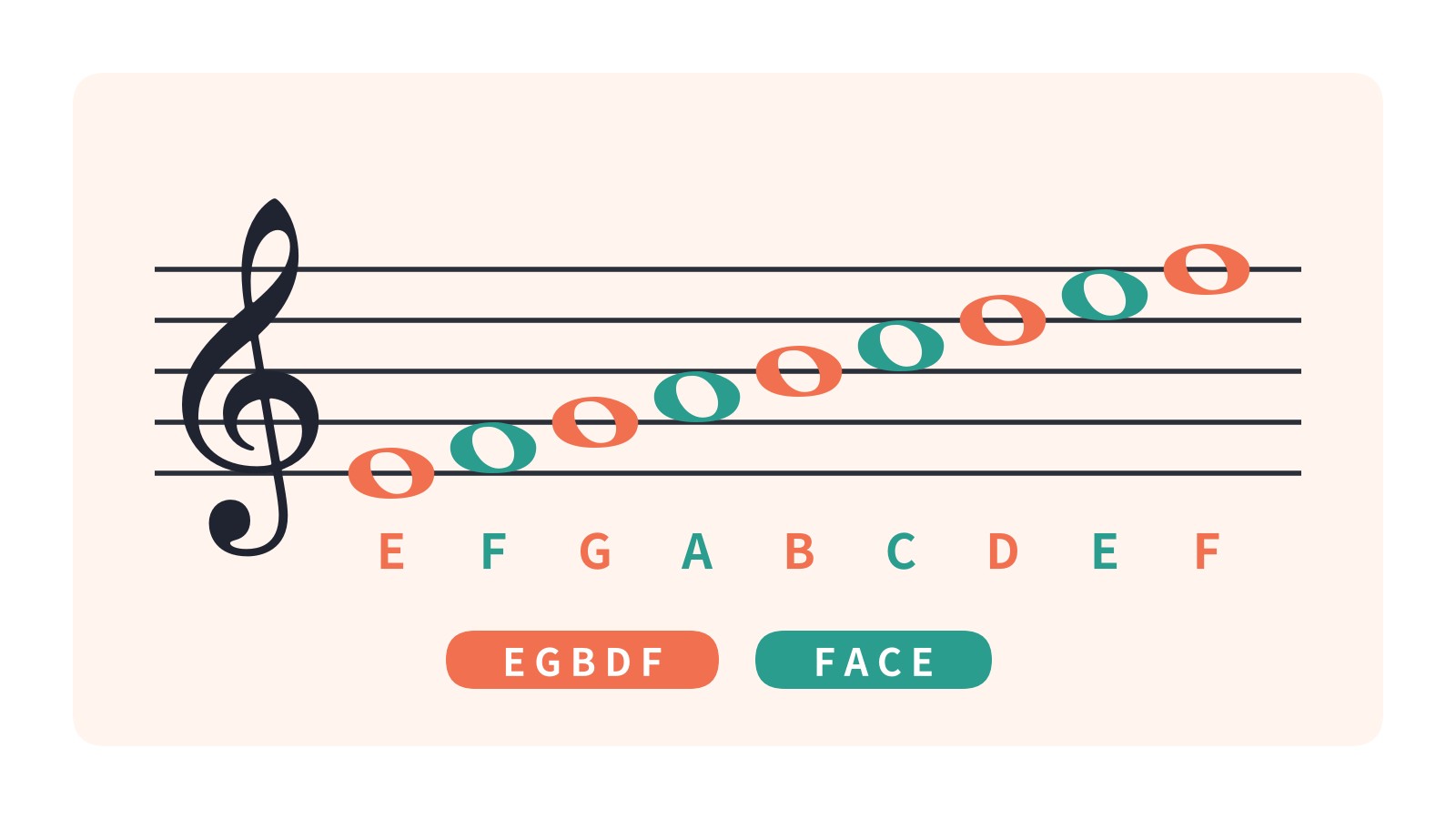
The treble clef lines from bottom to top are E, G, B, D, F, and the 4 spaces are F, A, C, E. The treble clef is also called the G clef because the clef curls around the second line, marking that line as G.
From bottom to top, each position's note and solfège (C major):
| Position | Note | Solfège (C major) |
|---|---|---|
| Line 1 | E | Mi |
| Space 1 | F | Fa |
| Line 2 | G | So |
| Space 2 | A | La |
| Line 3 | B | Ti |
| Space 3 | C | Do |
| Line 4 | D | Re |
| Space 4 | E | Mi |
| Line 5 | F | Fa |
Lines: E G B D F Spaces: F A C E
What are the bass clef notes?
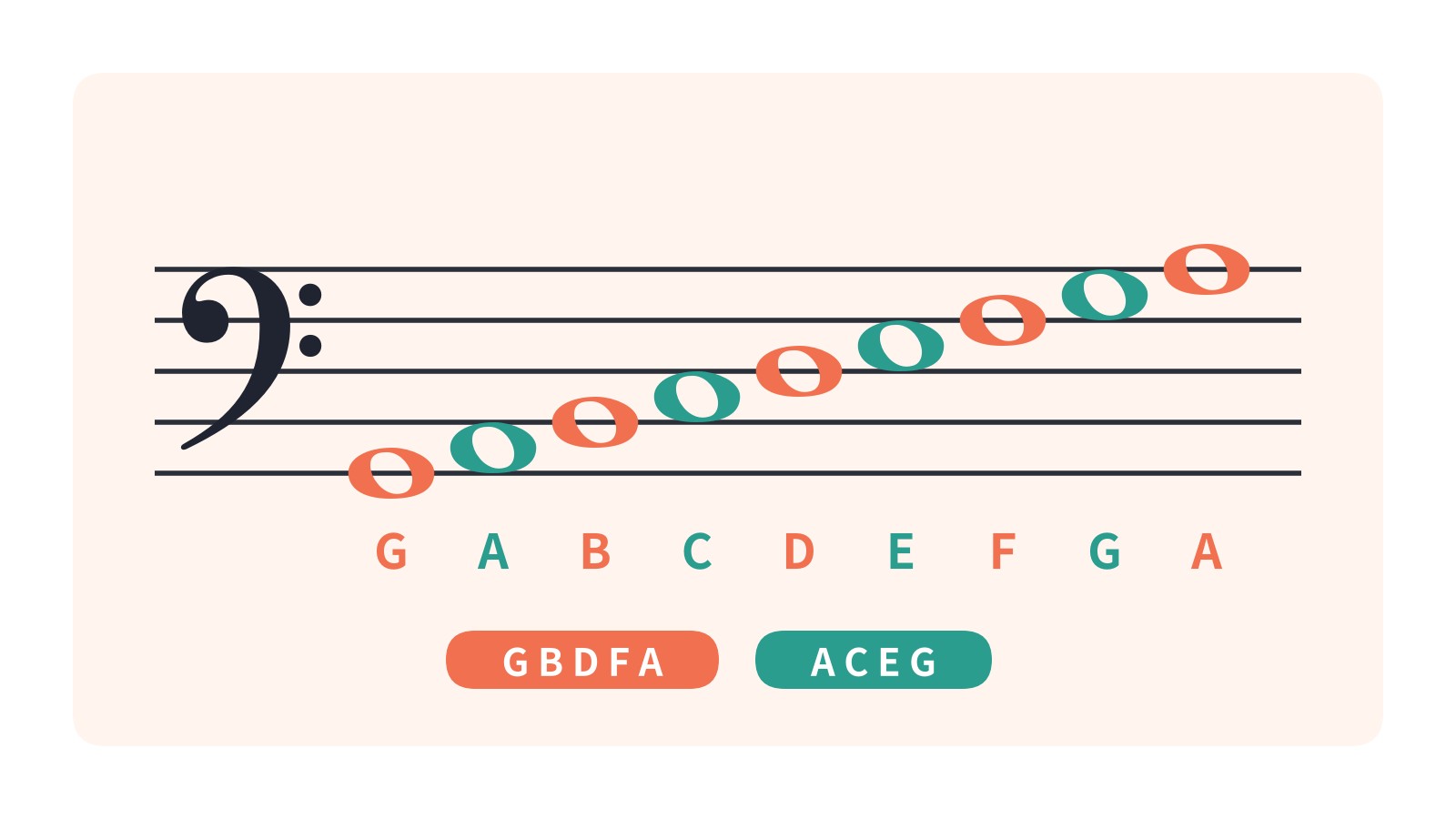
The bass clef lines from bottom to top are G, B, D, F, A, and the 4 spaces are A, C, E, G. The bass clef is also called the F clef because its two dots sit either side of the fourth line, marking that line as F.
From bottom to top, each position's note and solfège (C major):
| Position | Note | Solfège (C major) |
|---|---|---|
| Line 1 | G | So |
| Space 1 | A | La |
| Line 2 | B | Ti |
| Space 2 | C | Do |
| Line 3 | D | Re |
| Space 3 | E | Mi |
| Line 4 | F | Fa |
| Space 4 | G | So |
| Line 5 | A | La |
Lines: G B D F A Spaces: A C E G
Shortcut: in the same position, a bass clef note is two letters higher than the treble clef note. Line 1 is E in treble; count on two letters (F, G) and it is G in bass.
Where is middle C on the staff?
Middle C sits on the first ledger line below the treble staff and on the first ledger line above the bass staff. Notes above or below the staff get short extra lines called ledger lines.
- Middle C sits on the first ledger line below the treble staff, and on the first ledger line above the bass staff. Both are the same note: the C near the middle of the piano.
- The space just below the treble staff is D; one ledger line further down is middle C.
- The space just above the treble staff is G; the first ledger line above it is A.
How do you remember the notes on the staff?
| Clef | Position | Notes | Memory phrase |
|---|---|---|---|
| Treble | lines | E G B D F | Every Good Boy Does Fine |
| Treble | spaces | F A C E | FACE |
| Bass | lines | G B D F A | Good Boys Do Fine Always |
| Bass | spaces | A C E G | All Cows Eat Grass |
Memory phrases are training wheels. The goal is to name a note at a glance without reciting the phrase in your head.
What are some common note-reading mistakes?
- Counting from the top: lines and spaces are always counted from the bottom.
- Reading bass clef as if it were treble: left-hand notes are where most beginners slip. Use the "two letters higher" shortcut.
- Mixing up notes on and next to a ledger line: a line through the note means it is on the line; a note touching the line from above or below is in a space. They are one note apart.
How can you practise note reading in 5 minutes a day?
- Week 1: treble clef lines only. Point to 10 random line notes a day and name them.
- Week 2: add the spaces. Mix lines and spaces, 10 notes a day.
- Week 3: bass clef. Repeat the same steps for the left hand.
- After that: real music. Pick an easy beginner piece, name the notes first, then play.
When you play, scan the page with MusPal and play it to the app. The AI checks every note against the score and marks wrong notes right on the sheet, so you can see exactly which position you misread. The free plan includes 3 scans a month.
FAQ
Do you count the staff from the top or the bottom? From the bottom. The lowest line is line 1 and the highest is line 5.
What is the difference between treble clef and bass clef notes? In the same position, the bass clef note is two letters higher in name, and it sounds much lower.
Where is middle C on the staff? On the first ledger line below the treble staff, or the first ledger line above the bass staff.
How long does it take to learn all the notes? It varies. Short daily practice is generally thought to work better than one long session a week.
How do you remember the notes on the staff? Use four phrases: treble clef lines are Every Good Boy Does Fine and spaces spell FACE; bass clef lines are Good Boys Do Fine Always and spaces are All Cows Eat Grass. With practice you should name each note at a glance.
Sources
- Clef – Encyclopaedia Britannica: the treble clef fixes G on the second line; the bass clef fixes F on the fourth line
- The Staff, Clefs, and Ledger Lines – musictheory.net: the staff has five lines and four spaces; ledger lines extend it
- Clef – LibreTexts, Understanding Basic Music Theory: middle C lies above the bass staff and below the treble staff
Free plan: 3 scans + 3 AI analyses every month